
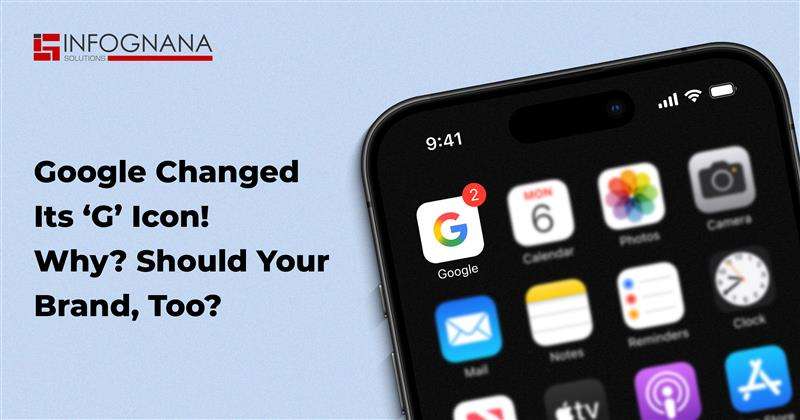
Google Changed Its ‘G’ Icon! Why? Should Your Brand, Too?
Reading time: 5 minutes
Google updated its legendary ‘G’ icon for the first time in ten years. The brand refresh was what Google needed to stay up in the race, reflecting the growing influence of AI, personalization, and a more immersive web. It wasn’t just an icon update, it was a statement! The big move came with no announcements or hype, yet it got the whole world talking! The smart move to advertise without paid marketing is a classic example of how even the slightest change in a brand, in itself, is advertising. Google’s subtle yet striking update was spotted on iOS and Pixel devices on May 12, 2025, and quickly became a hot topic of speculation.
What Changed?
The old icon featured four solid colors: red, yellow, green, and blue, which sat flat. The makeover doesn’t change much but blends all four colors into a fluid gradient, giving it a sleek and aesthetic look. It’s not “just” a gradient; it’s much more! It speaks volumes about the tech giant’s evolving brand identity in a multi-device, AI-driven world. The newly blended icon also aligns with the gradient it uses for the Gemini’s logo design.
Google last updated its logo in 2015, signaling a shift to seamless computing across many devices. Although it hasn’t officially stated as to why the current change was made, there are speculations around it being part of a move toward a more inclusive ecosystem, among other reasons.
The tech giant has also not yet revealed whether the change will apply to its six-letter ‘Google’ logo or be adopted for other apps.
What Is Rebranding And Why Is It Important For Businesses?
Big brands don’t change their visual identity unless their entire ecosystem is shifting. It’s a small design change, but design always follows behavior. Google’s icon refresh is a powerful reminder of how even the most established brands continue to adapt and refine to the ever-changing market. Rebranding is not just a strategy used by big brands; it is an opportunity in disguise.
A thoughtful design is trust at scale—it’s unique and memorable. With hundreds, if not thousands, of brands emerging each day, it’s important to think about how you, as a brand, are going to stand out. The brand color, logo, font—everything speaks volumes about who you are as a brand and your story.
Rebranding, as the name suggests, is nothing but ‘doing over.’ It’s not just limited to an icon, as most people might think; it’s the reinvention of everything from a brand’s name and tagline to its visual identity, typography, and website. Rebranding doesn’t mean you’re simply fixing something from time to time (as the idiom goes, ‘if it ain’t broke, don’t fix it’). Rather, it means you’re streamlining your services under one identity, addressing a persistent issue with your current brand, or catering to a new target audience.
Let’s take a look at the advantages of rebranding and why businesses do it:
- Adapt to an Evolving Market
Companies choose to rebrand to remain relevant in an ever-changing market. As trends in consumer taste, technological advancements, and competitive landscapes shift over time, a new brand image helps businesses connect with their target audience better. By refreshing their brand identity, businesses can move away from outdated perceptions and align more closely with what their customers now value, anchoring themselves for the long run.
- Reach New Audiences
As trends evolve, so do the people, and so must brands. A strategic brand makeover can help companies appeal to fresh customer segments or venture into untapped markets. Whether through geographical expansion or targeting a new demographic, a new brand image can make the company more attractive to a broader audience. This includes refined messaging, imagery, and positioning that speak to the trend-aware audience without losing the current customer base.
- Reflect Business Growth or Evolution
As businesses grow, their original branding may no longer align with their values, vision, or offerings. Rebranding signals that the company has evolved, whether through expanded services, the adoption of innovation, or a shift in mission. It portrays the company as innovative and forward-thinking. This change builds credibility among stakeholders and helps employees better understand the brand’s future and contribute to its ongoing success.
- Differentiate from Competitors
The superiority of your products or services is embedded in your brand narrative. In a noisy market, strong and unique branding is important to cut through. Rebranding can hone a firm’s competitive advantage by making its distinctive value proposition clear. It helps customers quickly understand what sets the brand apart, whether through storytelling, visual design, or brand voice. A clear, distinct identity makes the brand memorable, boosts customer loyalty, and positions it more effectively against competitors.
- Repair a Damaged Reputation
If a business has experienced negative publicity, a decline in reputation over time, or outdated perceptions, rebranding can serve as a powerful reset. A new brand identity signals change, improvement, and a commitment to doing better. This can restore customer confidence in the brand or its leaders, generate fresh interest, and rebuild the brand’s reputation in the marketplace.
Google’s Icon Changed—What Now?
Google has set the tone, and others are likely to follow. Why does this matter? Because even a small change from Google means something. It serves as a reminder that ten-year brand cycles aren’t just timelines—they’re opportunities for evolution. If you’re considering rebranding your business, it’s important to choose a reliable partner who will build your brand, not break it.
Infognana Solutions—Your Rebranding Partner
Infognana Solutions has over 25 years of experience in branding and rebranding businesses of all sizes, from startups to industry leaders. By combining the power of AI with human creativity, we bring your brand to life and ensure it reaches the right audience with the right message. If you’re considering rebranding, talk to us today!

